Student organization for independent tutors
How To Organize Tutoring Students Without Scattered Notes
Recurring students create a continuous history: goals change, homework carries into the next lesson and schedules evolve. One clear profile keeps that history usable without collecting unnecessary information.
Why student information gets scattered
A tutor may keep contact details in a phone, recurring times in a calendar, goals in a notebook and recent progress in chat. Each place solves one immediate need, but none shows the full working context for the next lesson.
With recurring students, small changes accumulate. The student moves to a new level, pauses for a month, changes lesson time or begins a different goal. When those changes are not connected, the tutor must reconstruct the relationship before preparing each lesson.
A useful student profile is a starting point, not a long biography. It should show stable details and lead directly to the relevant lesson, homework and payment history.
What belongs in a student profile
Collect the smallest amount of information needed to teach, schedule and follow up reliably. Use structured fields for stable details and keep free-text notes focused on tutoring.
Avoid copying entire message histories or collecting personal details that do not support the tutoring relationship. Access should remain limited to the tutor, the relevant student and an authorized guardian where needed.
Keep goals, subject, level and schedule visible
These four details answer the questions a tutor needs before opening the latest lesson. They should be visible near the top of the profile and easy to update when the learning plan changes.
Subject
English
The active area of study
Current goal
Confident conversation
The outcome guiding lesson choices
Working level
B1
A practical current reference
Recurring schedule
Wed · 17:00
60 minutes · Europe/Madrid
The example above is fictional. If a student studies more than one subject, keep each active subject and its learning plan distinct rather than merging all goals into one note.
For weekly patterns, future schedule changes and one-off exceptions, use the guide to managing recurring tutoring lessons.
Connect lesson history and homework
The profile should lead to a chronological lesson history. Each lesson can then hold the topic, progress and next step described in the tutor lesson notes template.
Homework should remain connected to the lesson where it was assigned, while keeping its own due date and follow-up state. The homework tracker for tutors shows how to keep assignments findable after they leave the chat.
12 Aug
Lesson completed
Progress and next step recorded.
12 Aug
Homework assigned
Task linked to this lesson.
19 Aug
Next lesson
Open with the previous follow-up.
Track payment balance without mixing it into private notes
Keep the current balance and lesson-level payment state visible from the student record, but separate from learning observations. A payment entry should explain the amount, date and lessons covered; a teaching note should explain progress and preparation.
Separate financial history
Lesson state + payment state + amount
A balance should be explainable from structured entries without exposing unrelated learning notes.
Use the private tutor payment tracker for the lesson-level structure, or follow the practical guide on how to track private tutor payments for the after-lesson and weekly routine.
Archive inactive students instead of deleting history
When lessons stop, mark the student inactive and remove them from everyday views. Keep the previous lessons, homework, payment entries and changes available in the archive.
Archive preserves context
If the student returns, the tutor can reactivate the profile and understand the previous goals, schedule and open follow-up without rebuilding the history.
Deletion should be reserved for an intentional privacy or retention action. It should not be the normal way to keep the active student list tidy.
A simple student organization template
Use four compact sections. Each should answer a recurring preparation or follow-up question.
For a complete field-by-field version you can reuse, open the private tutor student profile template.
Profile
- Student label
- Contact
- Subject
- Level
Learning plan
- Current goal
- Focus area
- Next milestone
Schedule
- Recurring time
- Duration
- Timezone
History
- Latest lesson
- Open homework
- Next action
Do not duplicate full lesson notes or assignment text in the profile summary. Link to the source record and show only the latest state or next action.
How Clasenda keeps student history connected
Clasenda gives each recurring student one workspace profile connected to schedule, lessons, notes, homework and payment history. Stable defaults remain visible while dated records preserve how the tutoring relationship changed over time.
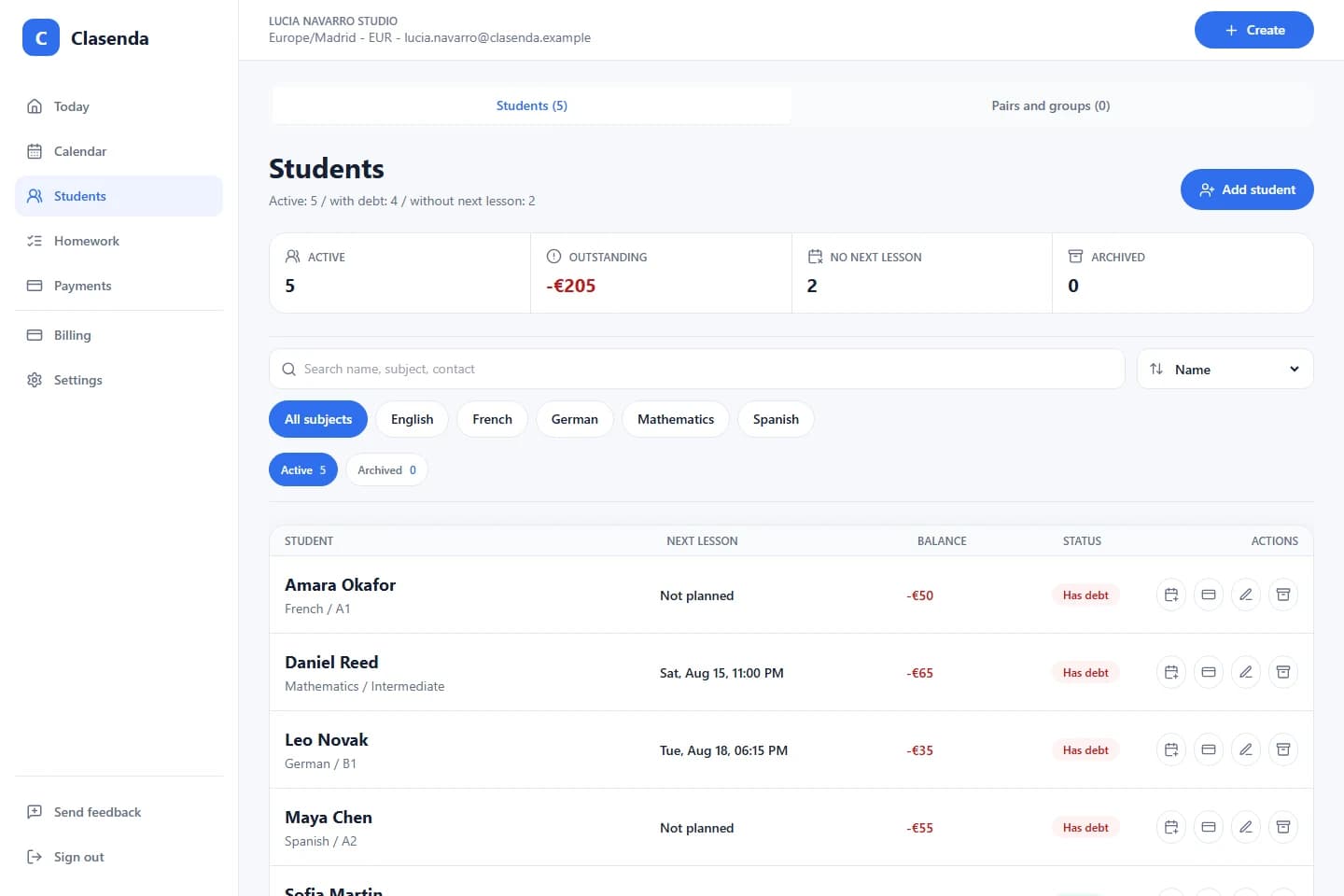
The aim is not to create a more detailed database. It is to make the next lesson easier to prepare and every open follow-up easier to find.
Use the private tutor weekly admin checklist to review open work across recurring students without expanding every profile.
Start with one recurring student
Keep each student history organized in Clasenda.
Add the stable details, schedule the next lesson and keep future notes, homework and payment state connected from the beginning.
Start with one student